

Submission: Gas Market Review
Executive Summary
Gas is not just a fuel. It is a foundation of Australia’s industrial base, a competitive export, and an essential enabler of the energy transition. A healthy gas market supports gas-powered generation, manufacturing, fertilisers, chemicals, food processing, and other sectors that underpin jobs and regional economies. Without a secure and competitively priced domestic supply, these industries face decline, risking our sovereign capability.
However, the East Coast Gas Market faces structural challenges. Supply-demand imbalances, falling industrial demand in key states, underdeveloped long-term contracting, overlapping regulation, and unpredictable policy interventions are discouraging the private investment needed in both gas production and transmission. Without reform, Australia risks higher prices, lower reliability, and a loss of competitiveness for industry.
This submission identifies seven key reforms to improve market stability, unlock investment, support gas exports and ensure that Australian gas is available for Australian users — at all times of the year and under both long-term contracts and spot arrangements.
1.1 Summary of recommendations
Recommendation One: Modify the Form of Regulation Review process.
APGA recommends the Government consider the following reforms to strengthen regulatory certainty and support investment confidence in the East Coast Gas Market:
- Establish and communicate a clear evidentiary threshold for initiating a Form of Regulation Review, requiring the regulator to demonstrate either a clearly defined market failure or material harm before a Form of Regulation Review can be initiated.
- Introduce a narrow, independent review mechanism as a safeguard to ensure FoRR decisions are subject to oversight, maintaining investor confidence.
- Require the relevant Minister to make a FoRR decision, based on the recommendation of the regulator.
Recommendation Two: Introduce mechanisms to help protect brownfield projects from the uncertainty of potential price regulations.
APGA recommends that the Federal Government consider target reforms to extend elements of the Greenfield Incentive framework eligible brownfield projects.
Such reform should:
- Provide equivalent regulatory certainty and incentive structures for eligible brownfield projects as those available to greenfield developments, including time-bound derogations from economic regulation and price determinations.
- Establish transparent eligibility criteria to ensure only projects that provide demonstrable market and consumer benefits qualify.
- Encourage investment decisions that maximise the capacity and efficiency of existing infrastructure where this offers a lower-cost and faster-to-market solution.
Recommendation Three: Establish clear and time-bound approvals processes.
APGA recommends that the Federal Government introduce statutory timeframes and procedural milestones for major gas infrastructure approvals to improve investment certainty and align Australia with global best practice.
Such reform should:
- Mandate fixed approval timelines under the EPBC Act, and other relevant legislation.
- Set clear thresholds and limits for appeals and judicial review to avoid infinite delays.
Recommendation Four: Reconsider the application of the Day Ahead Auction.
APGA recommends that the Federal Government consider targeted reforms to the Day Ahead Auction (DAA) framework to ensure it does not undermine the long-term contracting required to support pipeline investment in the East Coast Gas Market.
Such reform should:
- Exempt pipelines granted the Greenfield Incentive from being subject to the DAA for the duration of the derogation period.
- Preserve the commercial outlay for new infrastructure projects that rely on firm, long-term contract to achieve financial viability.
Recommendation Five: Introduce a carefully designed Domestic Reservation Policy.
APGA recommends that the Federal Government implement a carefully designed domestic gas reservation scheme to ensure Australian gas is available to Australian end-users.
Such reform should:
- Be structured to underpin long-term domestic contracting and support investment in new and upgraded gas infrastructure.
- Operate in a way that is responsive to market conditions, avoiding distortions in times of oversupply while ensuring adequacy during shortages.
- Protect Australia’s reputation as a reliable energy supplier by meeting existing export commitments and minimising sovereign risk.
- Maintain a clear distinction between energy policy, focused on securing adequate and reliable supply, and industry policy, which should be the mechanism to support sectors that remain under pressure even once energy market settings are optimised.
Recommendation Six: Supporting the development of renewable gases.
APGA recommends that the Federal Government review the Gas Market Code to ensure regulatory obligations are proportionate to the scale and market impact of the producer.
Such reform should:
- Clarify the application of the ‘small producer’ exemption to remove uncertainty and compliance risk.
- Ensure that compliance and reporting requirements do not impose disproportionate burdens on small producers, including emerging renewable gas developers.
- Focus regulatory effort on producers with the scale and market power to materially influence domestic supply and pricing outcomes.
Recommendation Seven: Federal Government must encourage long-term policy stability.
APGA recommends that the Federal Government, with bipartisan support, set stable, long-term gas market settings to provide certainty and enable investment. This will allow proposed reforms to take full effect and reduce the need for further intervention.
Australia’s gas transmission sector is ready to deliver the infrastructure needed but only if the investment environment is stable, regulatory risk is reduced, and supply-side reforms ensure end-users can access gas when they need it. These seven recommendations provide a balanced pathway to help restore market function, attract private capital, and secure the role of gas in supporting Australia’s economy through the energy transition.
2 Introduction
The Australian Pipelines and Gas Association (APGA) represents the owners, operators, designers, constructors and service providers of Australia’s pipeline infrastructure. Our members deliver more than 1,500 PJs of natural gas each year for domestic use and over 4,500 PJs for export markets, underpinned by the highest standards of safety, reliability and operational performance. For decades, this infrastructure has been a cornerstone of Australia’s economic strength, providing secure, low-cost energy that has supported growth, sustained long-term trade, and enabled industry to compete globally.
APGA welcomes the opportunity to contribute to this Gas Market Review (the Review) and to help shape a robust East Coast Gas Market. This is a pivotal process. A well-functioning gas market is essential to supporting Australian homes and businesses, driving a competitive downstream economy, and sustaining a strong export sector that helps our regional trading partners decarbonise while meeting their energy needs. Getting the Review right will secure the long-term affordability, reliability and security of domestic gas, while underpinning the Future Made in Australia agenda through economic resilience and sovereign capability.
Today, Australia’s trade balance remains heavily reliant on coal and gas exports, which together generate more income than all non-mining goods and services combined. As global demand for coal declines, one of our largest export revenue streams will inevitably contract. Without a credible downstream economic diversification plan, Australia risks structural trade deficits that could weaken the dollar and increase the cost of essential imports.
Gas has a unique role in managing this transition. It remains in strong demand as a lower-emissions fuel and critical industrial feedstock, while domestically it underpins the competitiveness of the manufacturing and processing sectors. Secure, affordable gas supply would preserve a valuable export earner and provide the foundation for rebuilding high-value industries. Without it, the contraction of Australia’s industrial base, including job-rich sectors such as fertilisers, plastics, chemicals and food processing, will accelerate as operations offshore or close entirely. A strong gas market is therefore essential to reversing this decline, rebuilding manufacturing capability and protecting sovereign capability.
Ongoing concerns over domestic gas supply and pricing have driven major Commonwealth interventions, including the Australian Domestic Gas Security Mechanism (ADGSM), the Gas Code and the Heads of Agreement (HoA). While well-intentioned and initially delivering short-term gains such as increased contracting following the Gas Code’s implementation in early 2024, these measures have not addressed the underlying supply-demand imbalance.
The ACCC found that the majority of contracts agreed in the second half of 2024 for both 2025 and 2026 supply, have a term length of exactly 1 year.[1] This constrained certainty for buyers and deterring long-term investment. It warned that regulatory uncertainty, short-dated exemptions and pending reviews are undermining market confidence and contributing to longer-term declines in supply security, investment appetite and buyer confidence.
Addressing structural barriers, particularly those affecting the midstream sector, is essential to unlocking new supply and infrastructure capacity while maintaining export capability. A sustainable gas market must be underpinned by long-term contractual arrangements and regulatory stability to give investors confidence. Key barriers include:
- Form of Regulation Review (FoRR) uncertainty — AER’s ability to self-initiate reviews without clear thresholds undermines investment confidence in infrastructure.
- Regulatory instability — frequent changes to market rules and intervention without allowing time for impacts to materialise, creating uncertainty for investors.
- Underdeveloped long-term GSA market — reduced producer appetite to offer long-term contracts and customer reluctance to commit at current prices.
- Duplicative reporting — overlapping disclosure requirements across multiple agencies increasing compliance costs without improving transparency.
- Disproportionate compliance burden on small gas producers — regulatory settings designed for large incumbents applied to emerging or low-volume producers.
Without addressing these barriers, the ability of the market to deliver affordable, reliable and lower-emissions energy to Australian industry, households and regional partners will be at risk. Our submission outlines the reforms APGA considers necessary to remove barriers to midstream investment, increase the efficiency of existing infrastructure, and enable the East Coast Gas Market to deliver secure, affordable, and lower-emissions energy to consumers.
2.1 Structural barriers
2.1.1 Market dynamics
Australia’s gas transmission infrastructure is developed under a “contract carriage” model, which differs fundamentally from the “market carriage” approach used in other forms of energy infrastructure. Under market carriage, users access energy through a shared transportation network without needing to reserve specific capacity, and system development is effectively centrally planned. In contrast, contract carriage requires a pre-arranged agreement between a user and a transportation provider for dedicated capacity.
In practical terms, this means electricity transmission and distribution infrastructure, and to some extent gas distribution networks are developed through centralised planning processes, whereas gas transmission pipelines are developed according to specific needs. These pipelines are designed for bespoke capacity requirements and constructed only when there is a customer prepared to commit to a long-term transport agreement.
This model carries higher inherent risk for investors because returns are not guaranteed, unlike under the market carriage model. However, it drives more efficient capital allocation by requiring infrastructure proponents to secure commercial agreements before committing funds. This ensures projects are “right-sized” to actual demand, reducing the risk of overbuilding, avoiding unnecessary capital expenditure, and lowering costs for end users.
2.1.2 Importance of long-term contracts
The construction of a new pipeline is effectively “underwritten” by foundational contracts between a gas customer and a transport provider to deliver a set quantity of gas over a defined period. As noted by the ACCC in its 2016 Gas Inquiry, new pipelines tend to be built to meet the demand of foundation shippers, and existing pipelines are generally expanded in stages to meet incremental increases in demand.[2] This is, in part, because financiers impose constraints on debt, requiring pipeline operators to demonstrate low demand-side risk. As a result, spare or excess capacity is rarely built into new infrastructure, and ideally a pipeline would be fully contracted at the point of commissioning.
Historically, these foundational contracts were decadal in length, reflecting the fact that they were the only means to secure access to gas transport and this long-term commitment was necessary to justify the scale of capital investment. In recent years, the link between long-term contracts and infrastructure investment has weakened. A sharp contraction in the availability of long-term Gas Supply Agreements[3] has in turn reduced the prevalence of long-term Gas Transport Agreements. Without these longer-term agreements, the economics of developing new pipeline capacity or expanding existing assets are significantly weakened.
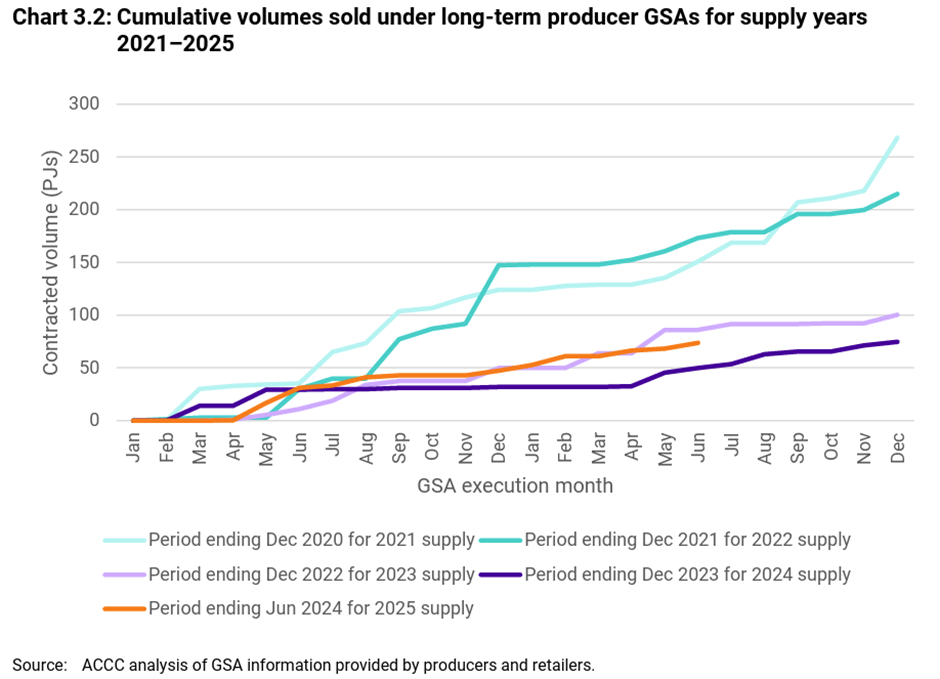
Several factors have contributed to this shift, including the introduction of mechanisms such as the Day Ahead Auction,. While these measures have been intended to improve competition and efficiency, they have also altered the commercial dynamics that underpin investment in new transmission infrastructure.
2.2 Policy direction creating demand risk
APGA strongly supports the transition to a net zero global economy, recognising the need to reduce emissions while maintaining energy security and affordability. Significant de-risking measures exist in other parts of the energy transition, particularly for infrastructure such as renewable generation, electricity transmission and storage, but comparable mechanisms are absent for gas transmission.
The midstream sector is not seeking public funding for gas transmission infrastructure. However, the additional regulatory risk being layered onto an already higher risk investment class is making it more challenging to reach Final Investment Decisions, discouraging private capital in a sector that’s vital to delivering a stable, affordable and orderly transition.
The combination of the energy transition and evolving emissions policies means infrastructure investors face significant long-term demand risk. A key question for the Gas Market Review is how governments can help industry manage, rather than eliminate, this transition risk and enable capital to flow into projects that will be vital for supply security.
While commercial assessments of future demand will always be necessary, the single most effective action the Commonwealth can take is to address regulatory uncertainty and provide a stable environment for long-term investment decisions.
2.2.1 Emissions policies increasing uncertainty
The transition to a net zero economy is essential, and a central challenge is finding the right balance between ensuring reliable energy supply and reducing emissions. The consumption of gas, whether to produce electricity, generate heat for industrial processes, or as a chemical feedstock, produces emissions that must be accounted for and ultimately reduced. The pace and scale of that reduction is subject to debate but in the meantime, gas remains critical to the Australian economy, both as a replacement for higher-emitting energy sources such as coal and as an enabler of grid stability in an electricity system increasingly dominated by variable renewable generation.
Like other infrastructure sectors, gas suppliers and transporters require access to a broad and stable customer base to de-risk investment. Yet some jurisdictions are signalling that, in line with emissions reduction objectives, gas use should and will decline across the economy, particularly in the residential and commercial sectors, where phase-out timelines are being proposed well before 2050.
This particularly includes Victoria, which historically has experienced some of the country’s highest reliance on gas for residential, commercial and industrial heating and energy. Rather than seeking to maintain this through encouraging investment in new supply, Victoria has actively pursued policies to destroy demand.
|
Case Study: Falling gas demand in Victoria In less than five years, Victoria has lost a quarter of its gas-using industrial economy. Once home to a diverse mix of gas-reliant heavy industries, from chemical manufacturing and petroleum refining to food processing and glass production, the state is now seeing that industrial base contract at a pace that is anything but gradual. Victoria’s Tariff D demand, which measures gas use by large industrial and commercial customers, has fallen from 17.9 PJ in 2021 to 13.5 PJ in 2025 — a reduction of 4.4 PJ, or almost 25 per cent. The past year alone saw demand drop from 14.6 PJ in Q2 2024 to 13.5 PJ in Q2 2025, an 8 per cent decline and the lowest Q2 result since the DWGM began in March 1999.[4] As AEMO notes, behind these figures are the closure of major facilities including Qenos, the Mobil Altona refinery, and Oceania Glass, as well as contraction in dairy, food manufacturing, and paper industries. Each of these closures has meant the loss of high-quality industry jobs and the erosion of local supply chains. Once these industries close, they are extraordinarily difficult to bring back — the capital, skills, and market confidence are often lost for good.
This trend is the antithesis of the Federal Government’s Future Made in Australia vision, which seeks to strengthen sovereign capability and secure long-term industrial jobs. The industrial gas base contracting at this rate undermines the foundations of that plan. This is not the slow, managed transition often described in policy terms. It is a rapid deterioration with far-reaching consequences for jobs, regional economies, and Australia’s ability to rebuild the industrial base in future. |
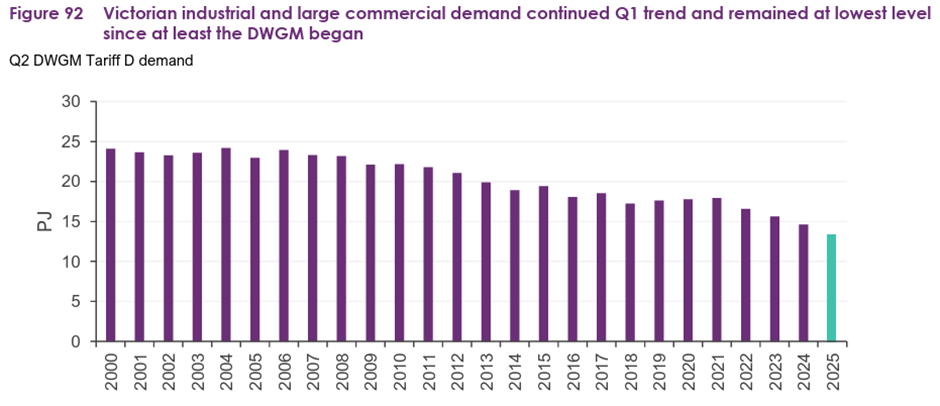
This disconnect between what we know about the necessity of gas during the transition, and how gas is treated through emission reduction policies, introduces demand risk. As AEMO in the VGPR notes: “Investment uncertainty in gas supply and infrastructure projects remains high as all projects currently underway or proposed in the VGPR outlook period face a range of challenges to reach investment decisions, maintain schedules and reach completion.”[5]
This risk is apparent in reluctance to develop gas resources or infrastructure, and is reasonable where investors cannot be certain their market will be curtailed through government intervention. This risk is compounded by the erosion of long-term contracts.
3 Opportunities to enable midstream investment
The East Coast Gas Market is undergoing significant change in both the profile of demand and the nature and location of supply. With production from the southern gas fields offshore from Victoria in decline, southern states are becoming increasingly dependent on gas transported from Queensland. Gippsland production is projected to fall from 243 PJ/year in 2024 to 109 PJ by 2028, creating a substantial shortfall in locally produced gas. As a result, customers in Melbourne and other southern markets are now often relying on gas transported from production hubs in Queensland, rather than from fields located offshore.
This shift underscores the critical role of gas transmission infrastructure now and into the future. Pipelines that connect distant production basins to southern demand centres are increasingly essential to ensuring reliable supply, supporting market integration, and maintaining downward pressure on prices. Without adequate investment in new and expanded transmission capacity, southern states risk supply constraints that could compromise energy security and increase costs for households and industry.
3.1 Form of Regulation Reviews
Discretionary intervention, particularly Form of Regulation Reviews (FoRRs) initiated by the Australian Energy Regulator is a major barrier to midstream investment in the East Coast Gas Market. These powers allow the AER to review and change the regulatory status of a pipeline at any time, with no avenue of appeal except on errors of law. For greenfield and brownfield transmission projects, which already carry significant commercial risk and often require capacity to be built ahead of demand, the prospect of mid-project regulatory change adds major uncertainty. This risk can render otherwise viable investments uncommercial.
This framework departs significantly from the principles in Chapter 3 of the National Gas Law, which separate key regulatory functions between different bodies to ensure balance and accountability. Under the current FoRR arrangements, the AER can initiate, investigate, determine and implement reviews, concentrating all decision-making power within a single entity. This centralisation erodes checks and balances, heightens uncertainty, and reinforces investor concerns about the predictability of regulatory outcomes and the absence of meaningful avenues for recourse.
The FoRR powers were intended as a mechanism for the regulator to respond where there was a documented risk of market power being exercised by pipeline operators. However, in implementing these powers, the AER adopted a program of two FoRRs per year, placing all gas transmission pipelines into a rolling review schedule. This means that any transmission investment must account for the heightened possibility that its economic regulation could be changed at any time, with flow-on impacts for other projects that rely on its connection.
|
Case Study: Form of Regulation Review on South-West Queensland Pipeline (SWQP) The SWQP is a 937 km bidirectional transmission pipeline owned and operated by APA since 2012. It is a critical link between Queensland production and southern state demand, ensuring gas can flow in either direction to balance seasonal and market needs. In 2024, the Australian Energy Regulator initiated a Form of Regulation Review on the SWQP as part of its FoRR program. This was not in response to any complaint or evidence of market failure. The possibility that the review could lead to full regulation, reducing the pipeline’s asset base and allowable revenues, significantly undermined investor confidence. In May 2024, APA delayed expansions of the SWQP, with CEO Adam Watson warning that the FoRR “threatened to stymie investment and drive up end user costs” and had “delayed critical projects that would otherwise strengthen the East Coast Gas Grid.” The SWQP case illustrates how a FoRR can operate as a powerful investment handbrake. Initiating a review without cause creates a prolonged period of uncertainty over the commercial framework for the asset, making it impossible for investors to model returns or secure financing on acceptable terms. For capital intensive infrastructure, where payback periods extend over decades, even temporary uncertainty can cause multiyear delays to capacity growth. In this instance, the FoRR not only halted the SWQP expansion but also sent a warning to the market that any non-scheme pipeline could face the same treatment, discouraging broader investment across the interconnected East Coast Gas Grid. The AER ultimately elected not to make a scheme pipeline determination for the SWQP, but stated it would monitor pricing behaviour for the SWQP, and has left open the door to revisiting this decision in the future. |
The current process does not require the AER to demonstrate a substantiated concern regarding market power, nor to draw on information gathered through its existing monitoring powers. Instead, operators may be required to provide information separately under a s42 information request, a process that imposes its costs and administrative burden.
APGA has engaged extensively with state and federal governments through the Energy and Climate Change Ministerial Council (ECMC), as well as directly with the AER, on the operation of the FoRR process. We acknowledge the AER has made amendments to its approach; however, these changes have not been clearly articulated to the market. As a result, significant uncertainty remains until the evidential parameters for initiating a FoRR are formally defined, communicated, and understood by midstream investors.
Addressing this regulatory risk, alongside other critical reforms such as inducing more long-term contracts into the market and extending the greenfield incentive, would materially reduce the primary investment barriers facing the midstream sector. If implemented, these reforms would unlock the private capital required for essential transmission infrastructure.
Recommendation One: Modify the Form of Regulation Review process
APGA recommends the Government consider the following reforms to strengthen regulatory certainty and support investment confidence in the East Coast Gas Market:
- Establish and communicate a clear evidentiary threshold for initiating a Form of Regulation Review, requiring the regulatory to demonstrate either a clearly defined market failure or material harm before a Form of Regulation Review can be initiated.
- Introduce a narrow, independent review mechanism as a safeguard to ensure FoRR decisions are subject to oversight, maintaining investor confidence.
- Require the relevant Minister to make a FoRR decision, based on the recommendation of the regulator.
3.2 Inequitable incentives for greenfield vs brownfield infrastructure
In 2006, the Commonwealth, through the South Australian Parliament, introduced the Gas Pipelines Access (South Australia) (Greenfields Pipeline Incentives) Amendment Act 2006. This reform implemented a key recommendation of the 2002 Parer Review, which recognised that heavy-handed or uncertain regulation has a chilling effect on private investment under the contract carriage framework. The Parer Review sought to reduce this risk, ensuring regulatory settings encouraged the development of new pipeline capacity.
The Amendment acknowledged the competitive benefits of new pipeline development and the financial challenge of building large-scale, capital-intensive infrastructure with decadal lifespans and correspondingly long investment horizons. It introduced the ability for proponents of new or greenfield pipelines to apply for Greenfields Incentive and Price Protection Determinations. These determinations provided a 15-year derogation from economic regulation, third-party access, and from specified prices for pipeline services in access disputes. The incentive was later incorporated into the National Gas Law (NGL).
To date, five pipelines have been granted this status — Wallumbilla-Gladstone Pipeline, APLNG pipeline, GNLG pipeline, the Comet Ridge to Wallumbilla Pipeline Loop, and the Northern Goldfields Interconnect.
While the framework allows applications for major extensions of existing non-scheme pipelines, meaning the pipeline can be made longer, it does not allow projects to qualify where the proposal is solely to expand the capacity along the existing length. As such, this has not been a significant driver of investment in brownfield infrastructure, even where expanding capacity on an existing alignment would be a lower cost or more efficient way to meet market needs. This creates an imbalance where regulatory settings favour building new infrastructure over optimising the capacity of assets already in place. Allowing brownfield capacity expansions to be protected from the uncertainty posed by potential imposition of price regulation in the future would unlock more value from the existing network, deliver capacity faster, and lower costs for investors and end users.
APGA recognises that not every brownfield augmentation should qualify for such incentives and welcome the opportunity to engage with government on possible forms of protection, as well as the thresholds and criteria that should apply to ensure that brownfield exemptions are targeted to projects that deliver clear efficiency, competition and public benefit outcomes. Properly calibrated, this reform would complement the existing greenfield framework and ensure that investment decisions focus on the most cost-effective and timely infrastructure solutions for the East Coast Gas Market.
Recommendation Two: Introduce mechanisms to help protect brownfield projects from potential future regulations.
APGA recommends that the Federal Government consider target reforms to extend elements of the Greenfield Incentive framework eligible brownfield projects.
Such reform should:
- Provide equivalent regulatory certainty and incentive structures for eligible brownfield projects as those available to greenfield developments, including time-bound derogations from economic regulation and price determinations.
- Establish transparent eligibility criteria to ensure only projects that provide demonstrable market and consumer benefits qualify.
- Encourage investment decisions that maximise the capacity and efficiency of existing infrastructure where this offers a lower-cost and faster-to-market solution.
3.3 Lack of defined statutory timeframes
Australia’s approvals framework for major transmission projects compares poorly with international peers. In Canada, the United States and the European Union, statutory timeframes for environmental and planning approvals are mandated, often with legislated limits from application to final decision. By contrast, Australian processes under the Environment Protection and Biodiversity Conservation Act (EPBC), state environmental assessment regimes and native title legislation often have no fixed deadlines.
This lack of temporal certainty undermines Australia’s competitiveness for international capital. Investors assessing projects across multiple jurisdictions are more likely to favour countries where the regulatory pathway is predictable and time-bound, enabling clearer risk assessment and faster progression to FID. In Australia, proponents cannot provide reliable delivery schedules, which complicates financing and can materially delay commencement.
This compounded by the broad scope for third-party legal challenge. In some frameworks, the absence of statutes of limitations allows appeals to be mounted long after approvals are granted, prolonging timelines, increasing costs and eroding investor confidence.
|
Jurisdiction |
Statutory Approval Timeframe |
Scope for Legal Challenge |
|
Australia |
No fixed national limit; often undefined at federal and state levels |
Broad, with no statutory limitation periods in some frameworks |
|
Canada |
Federal reviews generally expected within 24–30 months, but no strict statutory deadline; exceptions may apply for “national interest” projects. |
Appeal pathways exist, with some procedural frameworks but no national limitation rule |
|
United States |
FAST-41 improves timeliness via recommended performance schedules, but permitting still takes 2–4 years. |
Judicial reviews have statutory limits under NEPA, though timing varies by jurisdiction |
|
European Union |
Trans-European Energy infrastructure (TEN-E) seeks to streamline permitting but lacks a universally binding timeframe |
Appeals are scoped and limited under specific regulations, such as TEN-E |
These factors create systemic risk for nationally significant gas infrastructure and upstream projects. Reforming the EPBC Act to introduce clear, consistent and enforceable statutory timeframes, while streamlining and clarifying approvals requirements, is essential. This reform must apply to all nationally significant energy projects, renewables, gas, and electricity transmission, rather than relying on selective carve-outs that create winners and losers and distort investment signals.
|
Case Study: Misuse of regulatory processes to delay projects In late 2023, the Environmental Defenders Office (EDO) brought a legal challenge against Santos on behalf of Tiwi Island traditional owners, contesting the pipeline’s route past areas of alleged cultural significance. The EDO claimed the pipeline would disturb sacred sites, including ancestral beings like Ampiji the rainbow serpent and Crocodile Man. However, in January 2024, the Federal Court ruled in favour of Santos, finding that the EDO and its experts had engaged in a “subtle form of witness coaching” and produced evidence so constructed and misleading that “no weight can be placed on them.” As a result, the EDO was ordered to pay Santos over $9 million in legal costs. This episode illustrates how regulatory and legal mechanisms, though intended to safeguard cultural heritage, can be misused. Even unsuccessful challenges can inflict substantial delays, drive up compliance costs, and cast uncertainty over major infrastructure projects. Clear, consistent, and predictable approvals processes are fundamental to securing long-term investment in Australia’s gas infrastructure. Resolving these procedural risks is essential to enabling the energy transition, maintaining energy security, and preserving the competitiveness of the domestic economy. |
Recommendation Three: Establish clear and time-bound approvals processes
APGA recommends that the Federal Government introduce statutory timeframes and procedural milestones for major gas infrastructure approvals to improve investment certainty and align Australia with global best practice.
Such reform should:
- Mandate fixed approval timelines under the EPBC Act, and other relevant legislation.
- Set clear thresholds and limits for appeals and judicial review to avoid infinite delays.
3.4 Examining existing interventions
The Day Ahead Auction was introduced as a market-opening intervention but has ultimately increased investment risk in gas transmission infrastructure. It was implemented in response to concerns that some pipeline capacity contracted to firm shippers was going unused on a daily basis while shippers without firm contracts could not easily access it. In the absence of contractual arrangements, this was viewed by the Commonwealth and the Australian Energy Market Commission (AEMC) as an inefficient allocation of East Coast Gas Market pipeline capacity. Hence the Day Ahead Auction was implemented to open access to unutilised capacity.
Facilitated by AEMO, the Day Ahead Auction provides a platform for gas transport customers to bid for access to contracted but un-nominated transportation capacity on designated pipelines and compression facilities in the East Coast Gas Market. The reserve price for this capacity begins at zero.
On some days, transport customers can access services for free – which is obviously well below the cost of providing those services. This effectively embeds a free rider problem in the gas transport market, as it creates a strong disincentive for gas customers to contract all, or even most, of their requirements. The result is a disruption to the critical link between firm gas transport contracts and the economic viability of new pipeline development.
APGA considers there is scope for reform to ensure that the Day Ahead Auction does not disincentivise investment in new pipelines, which must be underpinned by firm, long-term contracts. One potential reform would be to exempt pipelines granted the Greenfield Incentive from being subject to the Day Ahead Auction for the duration of their derogation period. This would preserve the commercial certainty needed to justify new investment while still allowing the Day Ahead Auction to operate on mature assets where the sunk costs have already been recovered.
Recommendation Four: Reconsider the application of the Day Ahead Auction.
APGA recommends that the Federal Government consider targeted reforms to the Day Ahead Auction framework to ensure it does not undermine the long-term contracting required to support new pipeline investment in the East Coast Gas Market.
Such reform should:
- Exempt pipelines granted the Greenfield Incentive from being subject to the DAA for the duration of the derogation period.
- Preserve the commercial outlay for new infrastructure projects that rely on firm, long-term contract to achieve financial viability.
4 Opportunities to reform the broader East Coast Gas Market
Securing domestic access to affordable, reliable, and competitive gas is critical to sustaining Australia’s energy-intensive industries, which underpin jobs, sovereign capability, and economic resilience. While reforms to improve the investment environment for gas infrastructure are necessary, infrastructure changes alone will not deliver additional domestic gas. Structural market reforms are also required to restore a functioning environment for long-term Gas Supply Agreements (GSAs).
The ADGSM, Gas Code, and Heads of Agreement are all designed to support domestic supply. However, their impact has been limited, while prevailing market incentives continue to favour spot sales over long-term contracts. In the early and mid-2010s, long-term GSAs were essential for producers to secure project financing. Many of those assets are now mature and no longer require the same revenue certainty, making short-term sales more attractive and reducing the availability of reliable, long-term supply. This shift is contributing to market dysfunction and deterring investment in infrastructure and industrial capacity.
For customers, reluctance to enter medium- and long-term agreements, partly due to concerns about locking in higher prices, has further entrenched short-term contracting behaviour. Addressing these incentives on both the supply and demand sides will be complex, but is essential to restoring market function.
4.1 Domestic Reservation
The central objective of the Gas Market Review should be to set energy market settings that deliver affordable and reliable supply. Access to competitively priced gas is essential for the survival of energy-intensive industries. Excessive prices risk forcing users to exit the market or scale back operations, with long-term consequences for infrastructure utilisation, investment, and industrial capability. This has direct implications for the midstream sector.
While APGA does not take a position on the precise definition of a ‘reasonable’ price for the purposes of this Review, supply and price should be considered separately, with the primary focus on increasing supply. Once constraints are eased, the market will establish a new price equilibrium. If that price remains unsustainable for important industries, it should be addressed through industry policy rather than attempting to resolve it within energy policy.
To help ensure that increased supply reaches Australian customers, a domestic reservation scheme should be introduced so gas is consistently available to end-users throughout each calendar year, under both spot and long-term contracts. Existing mechanisms such as the ADGSM, Gas Code and Heads of Agreement have provided some initial protection for domestic supply, but they have not been fully effective in guaranteeing timely, affordable access. Without reform, there is little evidence this environment will improve.
Any reservation scheme must be prospective and carefully designed to maintain year-round domestic supply security while preserving Australia’s reputation as a reliable trading partner and avoiding undue sovereign risk. Meeting existing export agreements is essential, as they underpin some of the largest infrastructure investments in Australia’s history.
In the long term, the most effective way to secure domestic supply is to increase gas production and ensure the regulatory environment supports sustained investment in both production and transmission infrastructure. A well-calibrated domestic gas reservation scheme could help provide greater certainty for long-term domestic contracting once in place, but it must be complemented by initiatives that boost supply in the short term to address current market tightness.
Recommendation Five: Introduce a carefully designed Domestic Reservation Policy.
APGA recommends that the Federal Government implement a carefully designed domestic gas reservation scheme to ensure Australian gas is available to Australian end-users.
Such reform should:
- Be structured to underpin long-term domestic contracting and support investment in new and upgraded gas infrastructure.
- Operate in a way that is responsive to market conditions, avoiding distortions in times of oversupply while ensuring adequacy during shortages.
- Protect Australia’s reputation as a reliable energy supplier by meeting existing export commitments and minimising sovereign risk.
- Complement, rather than replace, broader supply-side reforms to improve domestic market resilience.
- Maintain a clear distinction between energy policy, focused on securing adequate and reliable supply, and industry policy, which should be the mechanism to support sectors that remain under pressure even once energy market settings are optimised.
4.2 Market transparency measures
Current disclosure requirements for gas market participants are, in some cases, no longer fit for purpose. APGA considers there are clear opportunities for reform to ensure transparency measures deliver meaningful value without imposing unnecessary compliance burdens.
4.2.1 Gas reserves disclosures
The 2022 Market Transparency amendments to the National Gas Rules require gas field owners to report 2P reserves and 2C contingent resources, with a breakdown between developed and undeveloped reserves. Reporting must also cover fields above the materiality threshold, including production status, development status, anticipated timing to production, and annual movements in 2P reserves such as production, extensions, upgrades, downgrades, acquisitions, or other revisions.
However, the effectiveness of these disclosure requirements remains uncertain. For example, recent Bass Strait discoveries were later subject to significant reserve downgrades before being upgraded again, creating uncertainty for gas buyers and infrastructure developers assessing the viability and timing of new pipelines. Such volatility in reserves data complicates investment decisions and increases the risk of delays in bringing critical pipeline capacity online, heightening the potential for supply-demand imbalances in the East Coast Gas Market in future years.
4.2.2 Supporting the development of renewable gases
Under the Gas Market Code, gas producers must comply with extensive annual reporting requirements and procedural obligations relating to supply agreement negotiations, with significant penalties for non-compliance. While the Code provides exemptions from pricing rules for ‘small producers’, defined as those producing less than 100 PJ per annum and supplying only the domestic market, uncertainty remains over the application and interpretation of this mechanism.
This uncertainty results in a disproportionate compliance and cost burden for smaller producers whose operations differ substantially from the large-scale producers the Code was designed to regulate. The issue is particularly acute for emerging renewable gas producers, which must meet these obligations alongside the inherent challenges of establishing a new industry.
Recommendation Six: Micro-producer exemption to help accelerate renewable gases.
APGA recommends that the Federal Government review the Gas Market Code to ensure regulatory obligations are proportionate to the scale and market impact of the producer.
Such reform should:
- Ensure that compliance and reporting requirements do not impose disproportionate burdens on small producers, including emerging renewable gas developers.
- Focus regulatory effort on producers with the scale and market power to materially influence domestic supply and pricing outcomes.
4.3 Policy stability and continuity
The Review outlines a range of reform options that, while targeted at gas producers, will have flow-on impacts for market participants across the supply chain. Whatever measures are ultimately adopted, they must remain in place without further amendments.
Over the past decade, the gas market has faced sustained policy upheaval, with successive interventions often introduced before previous reforms had time to take effect. In addition to the ADGSM, Gas Market Code and Heads of Agreement, significant reforms have included:
- ACCC Gas Inquiry reporting (2016)
- Information Disclosure & Arbitration for non-scheme pipelines (2016)
- Pipeline capacity trading framework/Day Ahead Auction (2017)
- Gas pipeline economic regulatory reforms (2022)
- East Coast Gas System supply adequacy reforms Stage 1 (2022)
- Gas Transparency Measures & Market Transparency Rule (2023)
- Part 10 & 18A – Pipeline Reporting Guidelines (2023)
- Safeguard Mechanism Reforms (2023)
- East Coast Gas System supply adequacy reforms Stage 2 (2025-)
An unstable regulatory environment increases costs, raises sovereign risk, and deters investment in essential infrastructure. This uncertainty is no longer acceptable.
Recommendation Seven: Federal Government must encourage long-term policy stability.
APGA recommends that the Federal Government, with bipartisan support, set stable, long-term gas market settings to provide certainty and enable investment. This will allow recent reforms to take full effect and reduce the need for further intervention.
5 Consultation questions
|
Question |
APGA response |
|
Supply, security and trade |
|
|
1. How effective are the existing instruments in ensuring sufficient supply of natural gas for Australia’s domestic gas market, including impacts on the exploration and development of new gas resources? |
Existing instruments have not delivered the investment in transmission capacity required to ensure gas can move efficiently to demand centres year-round. While they have improved short-term contracting, they have left key midstream barriers unresolved. · FoRR powers, applied without cause as part of a rolling program, have created prolonged uncertainty and directly delayed projects such as the SWQP expansion. · Greenfield incentives apply only to new alignments, excluding lower-cost brownfield capacity expansions that could be delivered faster and with greater efficiency. · Approvals processes under the EPBC Act and state regimes lack statutory timeframes, making project schedules unpredictable and misaligned with supply needs. |
|
2. Have the reforms affected the competitiveness of Australia’s LNG export industry, investment reputation or international reputation for quality and reliability? |
N/A |
|
3. How might the instruments be improved to better achieve the Review’s objective? |
The Review should adopt targeted reforms to reduce regulatory risk and align incentives for timely capacity investment. · Set clear evidentiary thresholds before a FoRR can be initiated, ensuring action is based on demonstrated market failure or material harm. o Introduce a narrow, independent review mechanism as a safeguard to ensure FoRR decisions are subject to oversight, maintaining investor confidence. o Require the relevant Minister to make a FoRR decision, based on the recommendation of the regulator. · Extend greenfield incentives to qualifying brownfield expansions to unlock latent capacity in existing networks. · Mandate statutory approvals timelines and procedural milestones across all jurisdictions. · Reform the Day Ahead Auction to prevent erosion of the long-term contracting base that underpins new infrastructure. · Introduce a domestic reservation policy that complements supply growth rather than substituting for it. · The Federal Government, with bipartisan support, set stable, long-term gas market settings to provide certainty and enable investment. This will allow recent reforms to take full effect and reduce the need for further intervention. |
|
4. Are there alternative policies that would secure gas for Australian consumers while maintaining a strong LNG export industry? |
Yes. There are alternative policy measures that would deliver secure domestic supply while preserving a strong LNG export sector, but they must address midstream investment barriers, not just upstream production. · FoRR reform to remove the risk of regulatory changes mid-project, restoring investor confidence in long-term assets. · Brownfield incentives to unlock capacity in existing corridors faster and at lower cost than building new alignments. · Statutory approvals timelines to ensure infrastructure is delivered in step with new supply developments. · Day Ahead Auction reform to protect the long-term contracting base essential for financing new capacity. · Well-calibrated domestic reservation that underpins long-term contracting without undermining export commitments, ensuring year-round access for domestic users. Together, these measures provide a market-based, infrastructure-enabled pathway to get more gas to domestic users without sacrificing Australia’s export competitiveness or reputation for reliability. |
|
Contracting and bargaining power imbalances |
|
|
1. Has the Expression of Interest (EOI) and offer process in the Code and HoA respectively been effective? a. To what extent have these instruments helped address bargaining power imbalances? b. Have these instruments produced any unintended consequences? |
N/A |
|
2. Have existing instruments impacted your ability, either positively and/or negatively, to secure long-term contracts? |
Existing instruments have contributed to a decline in long-term contracting, which undermines the investment case for new and expanded transmission capacity. · The Day Ahead Auction has weakened the link between firm transport contracts and project financing. · Short-term contracting behaviour reduces the commercial certainty required to commit capital to multi-decade infrastructure. |
|
3. How might the HoA and Code EOIs and offer processes be improved? Potential improvements could include price guidance and feedback being required from producers or exempting buyer-led EOIs from the Code. How might this impact EOI processes? |
N/A |
|
4. Do you consider buyer negotiating positions would improve with a standard Gas Supply Agreement (GSA) template that provides guidance or optionality on non-price terms as a reference for negotiations? a. What non-price terms would benefit from standardising? b. What are the benefits of standardising terms and conditions? c. What are the barriers in adopting a standardised GSA? |
N/A |
|
Transparency |
|
|
1. What are your key sources of supply and pricing information (both from market bodies or elsewhere)? |
N/A |
|
2. What impact would more transparent or more timely information have on the supply of gas to the domestic market? How does this impact LNG operations? |
N/A |
|
3. How transparent are shortfall determination processes under the instruments, and in particular under the ADGSM? |
N/A |
|
4. Are you aware of uncontracted gas information and EOIs hosted on gas producer websites? If yes, please provide detail. |
N/A |
|
5. What changes are required to ensure you have sufficient access to market information (e.g., more real-time price information, available supply, contract terms etc) to make informed procurement decisions? |
Transparency measures should provide decision-useful information without imposing unnecessary compliance burdens, particularly on small or emerging producers. · Remove duplicative reporting obligations across multiple agencies to reduce compliance costs without reducing market visibility. Apply proportionate obligations to small producers, including emerging renewable gas developers, to avoid stifling new market entrants. |
|
6. What are the tradeoffs that come with closer to real time price transparency to the market? |
N/A |
|
7. Would consumers and/or producers support an information sharing arrangement whereby GSAs are reported in close-to-real-time to the AER (rather than waiting for an information order)? |
N/A |
|
Pricing |
|
|
1. Has the Code’s reasonable price mechanism been effective at reducing gas prices? a. Does the current reasonable price (set at $12/GJ excluding transport costs) reflect actual supply and demand conditions? b. Has price volatility reduced or increased under the instruments? c. Does the reasonable price support competition in Australia’s gas markets? |
N/A |
|
2. Is the mechanism in the Code for setting a reasonable price appropriate or should an alternative mechanism set the reasonable price? |
The notion of ‘reasonable price’ should not be determined by arbitrary and prescriptive mechanisms. Removing constraints will lead to greater investment and consequent supply into the market which will ultimately put downward pressure on prices. The market will establish a new price equilibrium. If that price remains unsustainable for important industries, it should be addressed through industry policy rather than attempting to resolve it within energy policy. |
|
3. What changes to the existing instruments are needed to ensure gas is affordable and reliable for your operations? |
N/A |
|
4. How might future market conditions or potential new supply sources (e.g. LNG regasification terminals) impact wholesale gas prices in both the southern and northern markets? |
N/A |
|
Efficient markets |
|
|
1. What benefits do bilaterial gas trades offer compared to use of AEMO’s facilitated markets. What barriers exist to greater use of AEMO’s facilitated markets? |
N/A |
|
2. Does bilateral gas contracting limit competition, transparency and a more efficient price formation process? |
N/A |
|
3. Views on the performance and efficiency of the wholesale gas market, including supporting evidence, are welcomed. Stakeholders may wish to consider specific market aspects, such as the following voluntary market (Gas Supply Hub) features: a. Bid/Ask spread: Do relatively low participant numbers and trade volumes lead to wide spreads? b. Trading volumes: Given the 5-fold increase in off-screen trades via the GSH since 2018, is there sufficient volume being transacted on screen to support reliable and efficient price discovery? c. Order book depth: Does the market have enough depth to support meaningful trades without excessive price impact? d. Execution times: Can participants reliably execute trades quickly at known prices, or are there delays and uncertainty? e. Price volatility: Is observed volatility a function of supply/demand fundamentals, or a symptom of low market liquidity? f. Market confidence: To what extent would more structured supply of gas to market, including for example a market making regime, encourage greater levels of confidence amongst smaller participants around the availability and price of gas at the GSH? |
N/A |
|
Governance of Gas Market Regulations |
|
|
1. Are the current roles and responsibilities of the AEMC, AER, AEMO and ACCC in gas market regulation and reporting clear and appropriate? If not, are there gaps or overlaps that could be addressed? |
Discretionary intervention, particularly Form of Regulation Reviews (FoRRs) initiated by the Australian Energy Regulator is a major barrier to midstream investment in the East Coast Gas Market. Under the current FoRR arrangements, the AER can initiate, investigate, determine and implement reviews, concentrating all decision-making power within a single entity. Concentration of regulatory functions in one entity undermines investment confidence as the real or perceived concerns regarding regulatory balance and accountability increases commercial risk. Regulatory powers must not remain vested to a single regulatory body. |
|
2. What has been your experience in relation to the reports and forecasts produced by these regulatory bodies? |
APGA has commented extensively on AEMO gas market reporting in the past but notes that the impact of new gas development projections for the 2026 ISP may resolve some of these systemic issues. |
|
Potential Options for Reform |
|
|
1. Do the issues you have raised in your submission warrant significant change to the current system? |
Yes. Proposed changes will improve investment confidence leading to increases in gas supply: · FoRR reform to remove the risk of regulatory changes mid-project, restoring investor confidence in long-term assets. · Brownfield incentives to unlock capacity in existing corridors faster and at lower cost than building new alignments. · Statutory approvals timelines to ensure infrastructure is delivered in step with new supply developments. · Day Ahead Auction reform to protect the long-term contracting base essential for financing new capacity. · Well-calibrated domestic reservation that underpins long-term contracting without undermining export commitments, ensuring year-round access for domestic users.
|
|
2. If yes, do any of options presented above offer better alternatives to the existing system and why? |
The most effective options are those that reduce regulatory risk and restore the conditions for long-term contracting and timely capacity delivery. · Set FoRR evidentiary thresholds and introduce narrow independent review with Ministerial decision to restore confidence in stable rules. · Extend greenfield incentives to eligible brownfield capacity expansions to unlock latent capacity quickly and efficiently. · Mandate statutory approvals timelines and milestones so infrastructure is delivered in step with supply needs. · Reform the Day Ahead Auction so it does not erode firm contracting that finances new capacity, including recognising Greenfield Incentive derogations. The regulatory and policy risks identified in this submission have curtailed investment decisions. The proposed reforms are necessary to remove commercial risk and improve investment confidence. |
|
3. If there are options not presented here that should be considered, please outline and explain how they would improve the current system. |
If not already included in the Review’s options, APGA recommends the following from our submission. · Apply proportionate obligations for small producers, including renewable gas developers, through a clear micro producer approach to avoid stifling early-stage supply. · Establish a bipartisan commitment to long-term policy stability so recent reforms can take effect and reduce the need for ongoing intervention. |
[1] ACCC, 2025, Gas Inquiry 2017-2030: Interim update on long-term contract prices for July–December 2024, https://www.accc.gov.au/system/files/gas-inquiry-march-gsa-2025-interim-report.pdf
[2] ACCC, 2016, Inquiry into the east coast gas market, https://www.accc.gov.au/system/files/1074_Gas%20enquiry%20report_FA_21April.pdf
[3] ACCC, 2024, Gas Inquiry 2017-2030: December 2024 Interim Report, https://www.accc.gov.au/system/files/accc-gas-inquiry-interim-report-december-2024.pdf
[4] AEMO, 2025, Quarterly Energy Dynamics Q2 2025, https://www.aemo.com.au/-/media/files/major-publications/qed/2025/qed-q2-2025.pdf
[5] AEMO, 2025, Victorian Gas Planning Report, https://www.aemo.com.au/-/media/files/gas/national_planning_and_forecasting/vgpr/2025/2025-victorian-gas-planning-report.pdf