

15 October 2025
Submission: Net Zero Fund
The Australian Pipelines and Gas Association (APGA) represents the owners, operators, designers, constructors and service providers of Australia’s pipeline infrastructure. Our members deliver over 1,500 PJ of gas each year to domestic users and 4,500 PJ for export.
APGA welcomes the opportunity to provide comments on the design of the Net Zero Fund, which will help support Australia’s industrial strength and export competitiveness.
Australia’s industrial strength and export competitiveness rely on reliable, affordable and low-carbon energy. Gas infrastructure, transmission, distribution and storage, is central to this transition. It delivers the energy, carbon and heat required for heavy industry, while also providing the network backbone for renewable gases such as biomethane and hydrogen.
Recommendations
The following recommendations outline how the Net Zero Fund can most effectively support industrial decarbonisation by targeting high-impact projects, scaling renewable gas, and improving investment confidence through better coordination across existing mechanisms.
Recommendation One: Support the decarbonisation of existing gas infrastructure
APGA recommends that the Government expand the Net Zero Fund’s remit to support projects that reduce operational emissions from Australia’s gas transmission, distribution and storage networks. Such reform should:
- Provide concessional finance, loan guarantees or co-investment for compressor electrification, methane-leak detection and repair programs, seal-gas recovery and vent-gas recompression systems.
- Support the use of renewable gases such as biomethane and hydrogen to fuel compressor stations and other network operations.
- Align funding windows with maintenance and upgrade schedules to minimise cost and project risk.
Recommendation Two: Accelerate renewable-gas deployment and integration
APGA recommends that the Government use the Net Zero Fund to accelerate renewable-gas deployment and integration into Australia’s industrial energy system.
Such reform should:
- Provide concessional debt and co-investment for large-scale biomethane and hydrogen projects, including upgrading, injection and network-connection infrastructure.
- Support feasibility and front-end engineering for early commercial projects and establish finance models with the Clean Energy Finance Corporation to crowd-in private capital.
- Encourage industrial clusters and renewable-gas precincts that co-locate production and storage facilities to reduce costs and improve regional resilience.
Recommendation Three: Focus on improving investment confidence and coordination
APGA recommends that the Government structure the Net Zero Fund to address policy and market barriers that prevent otherwise viable industrial decarbonisation projects from reaching investment decision. Such reform should:
- Reduce policy and demand risk through clear eligibility criteria, stable regulatory settings and long-term decarbonisation signals.
- Coordinate with existing mechanisms such as the CEFC and ARENA to ensure renewable-gas projects have clear and complementary funding pathways.
- Maintain technology and sectoral neutrality, enabling capital to flow to the most efficient decarbonisation options across industries and energy carriers.
Recommendation Four: Expand Hydrogen Headstart to biomethane
APGA recommends the Government expand Hydrogen Headstart eligibility from “renewable hydrogen projects” to “renewable gas projects”. Delivered by ARENA and CEFC, this requires only ministerial direction and updated program guidelines:
- Amend ARENA Funding Round Guidelines to explicitly accept biomethane proposals.
- Structure contracts as $/GJ of biomethane injected for individual projects, aligned to hydrogen support on an energy-equivalent basis.
- Allocate a defined tranche (e.g. $2b) to biomethane hubs (>200TJ/year).
- CEFC to provide concessional finance for upgrading and injection infrastructure.
The economic imperative
Australia’s energy exports are the cornerstone of its economic resilience. Australia’s thermal coal, metallurgical coal and LNG exports together exceed the value of every non-mining export combined, which includes sectors such as education, agriculture, and manufacturing. These commodity exports underpin a structural trade surplus that sustains the Australian dollar, supports government revenues and funds imports of essential goods and services.
As global markets decarbonise, our trading partners’ appetite for higher-emissions commodities is forecast to decline. Without new low-carbon export industries, Australia risks a structural deterioration in its trade balance. A weaker dollar would increase the cost of imported goods, machinery and energy inputs at the same time that our industrial base has been deteriorating — with Australian manufacturing falling from around 13 per cent of GDP in the early 1990s to less than 6 per cent today, the lowest proportion on record.
The transition is therefore not just an environmental or energy challenge, it is an economic sovereignty and national security challenge. If Australia cannot replace its fossil-based export value with clean, low-emissions alternatives, the nation faces a future of reduced export income, higher import costs, and a diminished industrial base. This would leave Australia more exposed to external shocks, foreign supply dependencies, and volatile global markets. A weakened manufacturing sector undermines our ability to produce critical materials, fuels, and defence-related components domestically, eroding both economic resilience and strategic independence.
The opportunity
The Net Zero Fund is a timely and necessary opportunity. It can catalyse the next generation of Australian export industries by investing in the infrastructure that will:
- Decarbonise the backbone that underpins Australia’s industrial and export economy.
- Accelerate renewable gas supply chains to produce low-carbon products such as green steel, fertiliser and alumina.
- Maintain sovereign capability by keeping high-value manufacturing and processing industries in Australia.
- Position Australia as a global supplier of low-emissions goods in a world of tightening carbon border measures.
- Support flexible gas-powered generation to displace coal and firm renewable energy, consistent with AEMO’s planning outlooks and reliability requirements.
We welcome the Fund’s objectives, and the gas infrastructure sector can play a major role alongside renewable electricity, storage, and new industrial technologies in achieving them.
What are the types of projects or capital expenditure that should be supported to achieve the Net Zero Fund’s objectives?
Why gas infrastructure matters for industrial decarbonisation
Australia’s emissions targets cannot be achieved through electrification alone. Industrial facilities require both heat and carbon-based feedstocks that electricity cannot yet provide efficiently or economically. Gas infrastructure underpins the production of steel, cement, alumina, glass, fertiliser and chemicals, and supplies reliable energy for manufacturing, food processing and regional industries that form the backbone of the national economy.
These transmission, distribution and storage networks will continue to transport gaseous energy, but in progressively cleaner forms. Decarbonising this infrastructure is a prerequisite for a net-zero industrial sector. It means reducing operational emissions from pipelines, compressors and processing facilities, while enabling the injection and transport of renewable gases such as biomethane and hydrogen. Together, these measures can deliver substantial abatement while preserving industrial capability and regional employment.
Priority project types
Decarbonisation of gas infrastructure
The Net Zero Fund can deliver immediate, verifiable emissions reductions by supporting projects that decarbonise the operation of Australia’s gas transmission, distribution and storage networks. These networks supply large industrial facilities and regional manufacturers that cannot yet fully electrify and will form the backbone for transporting renewable gases as the transition progresses.
Operational emissions in the gas supply chain come primarily from two sources: combustion of gas to power compressors and fugitive methane released through seals, valves and venting. These emissions are measurable, technically addressable, and can be reduced at relatively low cost compared with alternative industrial abatement options.
Box 1 – Pipeline methane and gas combustion emissions reduction opportunities
In 2024, APGA engaged Worley Consulting to identify practical and cost-effective emission reduction opportunities across Australia’s gas transmission network. The analysis found the most efficient measures were those addressing methane leakage and combustion efficiency. The highest value opportunities included:
- Seal gas recovery at $37/tCO₂-e
- Seal gas destruction at $40/tCO₂-e
- Leak detection and repair (LDAR) programs at $55/tCO₂-e
- Compressor rod package leak venting at $68/tCO₂-e
- Seal maintenance at $151/tCO₂-e[1]
Other technically feasible measures such as mobile vent flaring ($115–192/tCO₂-e) and recompression of planned venting ($184–315/tCO₂-e) offer further abatement potential but at higher cost. By contrast, options such as electric or air actuators ($307–425/tCO₂-e) were found to deliver relatively minor emissions savings at much higher cost and complexity.
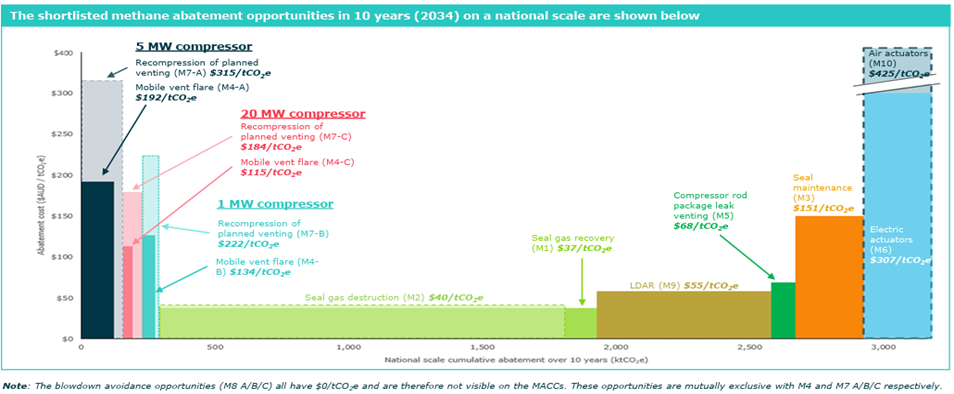
Scaled nationally, these measures could reduce emissions by about 3 million tonnes CO₂-e from methane capture and a further 50 million tonnes from combustion-reduction initiatives over the next decade. Each project is technically proven and suitable for rapid deployment, offering credible abatement aligned with the Net Zero Fund’s mandate to support large-scale industrial decarbonisation.
Investments could include:
- Methane-leak detection and repair using continuous monitoring.
- Seal-gas recovery and vent-gas recompression systems.
- Maintenance optimisation to reduce fugitive emissions.
- Fuel-switching to biomethane or hydrogen blends for compressor drives.
- Improved measurement and verification systems to support emissions reporting.
These projects face a common barrier: high upfront capital costs and limited ability to monetise emissions benefits. The Net Zero Fund should address this by improving investment conditions for first-mover and early-stage deployment projects that are technically proven but not yet commercially bankable.
Its role should be distinct but complementary to existing mechanisms.
ARENA supports technology development and demonstration, and the CEFC provides commercial finance once markets mature. The Net Zero Fund should sit between these, focusing on enabling deployment by funding feasibility, integration and early capital works that de-risk projects and attract private investment.
By bridging this “missing middle”, the Fund can lower perceived risk, signal policy stability and accelerate investment in projects that deliver measurable abatement. Because gas infrastructure operates under established regulatory and safety frameworks, these initiatives can be implemented quickly and deliver early progress toward national emissions targets.
Decarbonising gas infrastructure is therefore a strategic investment: it cuts emissions at low cost, sustains regional engineering and maintenance jobs, and prepares Australia to transport renewable gases at scale, strengthening climate and industrial outcomes.
Renewable gas production and network integration
Renewable gases, particularly biomethane and renewable hydrogen, are central to decarbonising the industries, buildings and sectors that cannot easily electrify. They provide the high heat and chemical feedstock required for processes such as steelmaking, alumina refining, glass and fertiliser production, and heavy manufacturing. Integrating renewable gases through existing gas infrastructure delivers large and verifiable emissions reductions while preserving the productive capacity of Australian industry.
The role of biomethane
Biomethane is a renewable form of methane produced by upgrading biogas from organic waste such as wastewater, agricultural residues, food waste and landfills. It is chemically identical to natural gas and can be injected directly into existing pipelines, used in standard industrial furnaces and boilers, and supplied to homes and businesses without modification to appliances. By capturing methane that would otherwise be emitted and turning it into energy, biomethane delivers both emissions reduction and waste management benefits.
Australia has the means to develop a globally competitive biomethane industry. Studies by ACIL Allen[2] and the Australian Renewable Energy Agency[3] estimate that more than 150 petajoules of biomethane could be produced each year from existing waste streams using current technology. Early projects demonstrate technical feasibility. Jemena’s Malabar Biomethane Plant in Sydney[4] injects upgraded biogas from wastewater treatment into the network, and AGIG’s hydrogen-biogas blend at Tonsley[5] in South Australia supplies households and businesses with renewable gas. These are important first steps but remain at pilot scale because investment signals and policy frameworks have not yet matured.
Box 2 - Jemena Malabar Biomethane Project
The Jemena Malabar Biomethane Project is Australia’s first example of producing biomethane and injecting it into a metropolitan gas network. Located at Sydney Water’s Malabar Wastewater Resource Recovery Facility, the project upgrades biogas from sewage sludge into biomethane that meets the Australian gas quality standard. Around 95 terajoules per year of renewable gas is injected into Jemena’s distribution system, enough to supply approximately 6,300 households.
The project proved technical feasibility by installing gas cleaning units to remove CO₂ and impurities, achieving methane purity above 98 per cent. A pipeline extension connecting into the existing network, along with buffer storage and odorant injection, ensured consistency and safety so that end users experienced no difference from conventional gas. This established a technical and regulatory pathway for future projects.
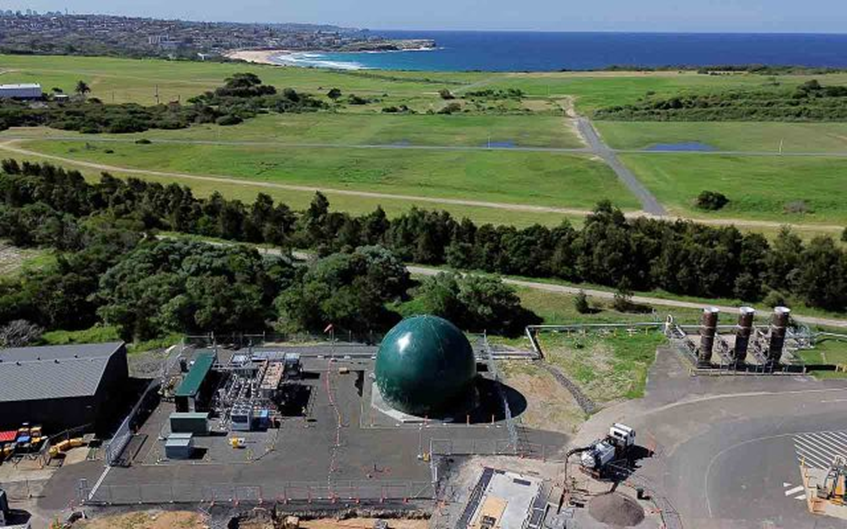
Malabar was the first facility accredited under GreenPower’s Renewable Gas Certification program in 2024, allowing Jemena to sell verified renewable gas. At the federal level, changes to the NGER Act in 2025 confirmed biomethane injected into the gas networks cand be recognised in emissions reporting. Together these steps provided a replicable template.
The environmental benefits are significant: displacing natural gas, reducing flaring, and cutting methane emissions from sewage while producing biosolids for agriculture. Sydney Water described the project as a successful demonstration of circular economy principles.
Jemena has since signed agreements with other waste operators and estimates biomethane could meet the needs of all industrial customers on its NSW network. The project demonstrates that with supportive policy, dozens of Malabar-style facilities could be developed nationwide, making renewable gas a practical contributor to Australia’s 2035 and 2050 targets.
Investment priorities
The Net Zero Fund should support the commercialisation of renewable-gas production and integration by financing large-scale, replicable projects. Priority investments include regional biomethane hubs that aggregate feedstocks from wastewater, agriculture and food-processing facilities; upgrading and injection infrastructure that connects production plants to transmission and distribution pipelines; and renewable-gas clusters to create efficient circular-economy precincts. These projects can deliver near-term emissions reductions, strengthen regional economies and improve energy security.
Economic and system benefits
Economic modelling by ACIL Allen[6] shows that developing renewable-gas supply chains leads to lower overall system costs and higher national output than an electrification-only pathway. Under the Optimal Renewable Gas Target scenario, Australia reaches net-zero gas emissions at an average abatement cost of about $150 per tonne of carbon dioxide equivalent, compared with around $165 per tonne under near-total electrification. National GDP is about $30 billion higher in net present value because renewable gases avoid the most expensive grid upgrades and make better use of existing infrastructure.
Even under optimistic assumptions for electrification, hundreds of petajoules of renewable gas will still be required by 2050 for industrial heat, feedstock and backup generation. Early scaling of biomethane and hydrogen is therefore a form of transition insurance that reduces cost and risk for the entire system.
Barriers to investment
The major obstacles are policy and market related rather than technical. There is currently no dedicated national funding stream, target or certificate mechanism for renewable gases.
Commonwealth programs such as Hydrogen Headstart and the Hydrogen Production Tax Incentive focus solely on hydrogen, even though it can be produced and deployed at lower cost. Without a defined market or long-term offtake arrangements, projects struggle to secure finance for upgrading, injection and grid connection infrastructure.
How the Net Zero Fund can help
Alongside the expansion of Hydrogen Headstart funding stream to biomethane via ARENA, the Net Zero Fund can address these gaps by providing concessional finance and co-investment for renewable-gas hubs, supporting feasibility and front-end engineering for commercial-scale biomethane projects, and funding the first network-connection and blending facilities that establish market confidence. Collaboration with the Clean Energy Finance Corporation would allow for low-interest loans and risk-sharing arrangements. Coordination with the Clean Energy Regulator could align financing with demand-side mechanisms such as a future Renewable Gas Target.
By combining these elements, the Fund can create the certainty and scale needed for the sector to move from demonstration to deployment.
Strategic outcomes
Investing in biomethane production and network integration achieves several objectives that go to the heart of the Net Zero Fund. It delivers immediate emissions reduction by capturing and utilising methane that would otherwise be released. It supports regional and industrial development by creating new waste-to-energy and bioprocessing industries that generate skilled employment. It improves energy-system efficiency by decarbonising gas supply without placing additional pressure on electricity networks.
Biomethane will operate alongside electrification and hydrogen as complementary pillars of Australia’s decarbonisation strategy. By supporting these projects now, the Net Zero Fund can deliver early progress toward the national emissions targets, lower overall system costs and ensure that Australian industry retains access to reliable, low-emissions energy in a carbon-constrained world.
Industrial Users and Downstream Applications
Australia’s industrial base depends on access to affordable, reliable and low-emissions energy. Large users of gas, including steel, alumina, glass, fertiliser, cement and food manufacturers, rely on gaseous fuels not only for process heat but also as a chemical feedstock that cannot yet be substituted by electricity. The Net Zero Fund can play a pivotal role in ensuring these industries continue to operate and invest in Australia while transitioning toward net-zero production.
Industrial Transformation Pathways
Many of Australia’s largest industrial employers are advancing decarbonisation strategies that hinge on lower-emissions gases. BlueScope[7], BHP and Rio Tinto are developing direct-reduced-iron technologies to use natural gas initially and renewable hydrogen in later phases. Alumina refiners are trialling hydrogen[8] in calcination processes to replace natural gas, while biomethane could immediately substitute in the same furnaces using existing infrastructure. Brickworks, which consumes about three petajoules of gas annually for brick firing, is experimenting with landfill biogas and biomass fuels to lower its carbon footprint.
These examples show industrial innovation is well underway, but that progress depends on continued access to reliable gas infrastructure and the availability of renewable gas supply at scale. A targeted strategy under the Net Zero Fund could accelerate this transformation, helping industries retain international competitiveness while reducing emissions.
Suitable projects
Eligible investments could include fuel-switching projects that replace coal or oil with natural gas or renewable gases in high-temperature furnaces and kilns; retrofits that enable blending or complete substitution with biomethane or hydrogen; and construction of shared energy infrastructure that links industrial clusters to renewable-gas sources.
The Fund could also support development of renewable gas precincts where multiple facilities co-locate to share feedstock aggregation, upgrading, injection and storage infrastructure. Similar to the operation of REZs, these precincts would reduce project costs, shorten permitting timeframes and stimulate new regional employment. In each case, the Fund’s role would be to de-risk capital investment through concessional loans or co-financing, enabling private developers to commit to final investment decision with confidence.
Economic and competitiveness rationale
Australia’s capacity to export processed minerals, advanced materials and manufactured goods depends on maintaining a competitive cost of energy. Over the past decade, energy-intensive manufacturers have faced rising input costs and increasing exposure to electricity price volatility. The closure of Alcoa’s Kwinana alumina refinery[9], Oceania Glass[10], and several major dairy facilities illustrates how energy costs can determine industrial viability.
Transitioning to renewable gases offers a pathway to stabilise energy inputs while reducing emissions. Gas-based technologies provide high-temperature heat and allow existing production lines to continue operating with minimal modification. This protects sunk capital and supports incremental decarbonisation rather than disruptive reconstruction.
By lowering emissions intensity and demonstrating credible abatement, gas-using manufacturers also strengthen their position under international carbon-border adjustment regimes. European and Asian markets are moving rapidly toward embodied-carbon accounting in trade, and the Australian Government has flagged intentions to consider implementing a carbon border adjustment mechanism. The Net Zero Fund can therefore deliver both environmental and economic returns by ensuring Australian products remain competitive in emerging markets.
Box 3 – Falling gas demand in Victoria
In fewer than five years, Victoria has lost a quarter of its gas-using industrial economy. Once home to a diverse mix of gas-reliant industries, from chemical manufacturing and petroleum refining to food processing and glass production, the state is now seeing rapid contraction.
Victoria’s Tariff D demand, which measures gas use by large industrial and commercial customers, has fallen from 17.9 PJ in 2021 to 13.5 PJ in 2025 — a reduction of 4.4 PJ, or almost 25 per cent. The past year alone saw demand drop from 14.6 PJ in Q2 2024 to 13.5 PJ in Q2 2025, an 8 per cent decline and the lowest Q2 result since the DWGM began in March 1999.[11]
As AEMO notes, behind these figures are the closure of major facilities including Qenos, the Mobil Altona refinery, and Oceania Glass, as well as contraction in dairy, food manufacturing, and paper industries. Each of these closures has meant the loss of high-quality industry jobs and the erosion of local supply chains. Once these industries close, they are extraordinarily difficult to bring back — the capital, skills, and market confidence are often lost for good.
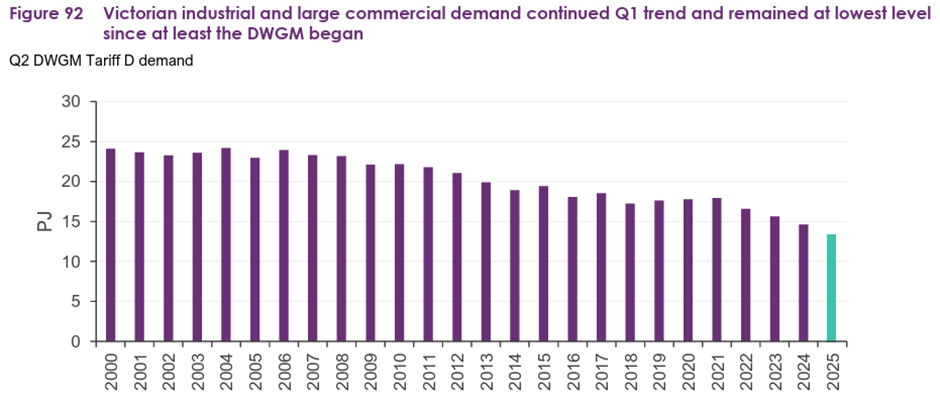
This trend is the antithesis of the Federal Government’s Future Made in Australia vision, which seeks to strengthen sovereign capability and secure long-term industrial jobs. The industrial gas base contracting at this rate undermines the foundations of that plan.
This is not the slow, managed transition often described in policy terms. It is a rapid deterioration with far-reaching consequences for jobs, regional economies, and Australia’s ability to rebuild the industrial base in future.
Barriers to industrial investment
The transition to low-emissions production is constrained by several persistent challenges. Energy cost and reliability remain the dominant factors influencing investment decisions. Industrial fuel-switching projects often face long payback periods and limited capacity to recover costs from customers. Capital requirements for retrofits, hydrogen-ready equipment and renewable-gas interconnections are high, and financing terms are less favourable where revenue certainty is weak.
Regulatory complexity also acts as a deterrent. Approvals for modified combustion systems, network connections or renewable-gas blending can involve multiple agencies and unclear standards. In addition, policy inconsistency between jurisdictions creates uncertainty for companies operating across several states.
How the Net Zero Fund can accelerate industrial decarbonisation
The Net Zero Fund can directly address these barriers through targeted financial support and coordination across government agencies. Concessional finance and loan guarantees can close the gap between commercial lending rates and the risk profiles of first-mover projects. Co-investment alongside the Clean Energy Finance Corporation and state governments can align federal and regional priorities while sharing financial risk.
The Fund can also play a convening role by supporting the creation of integrated industrial precincts where renewable-gas production, carbon capture, waste utilisation and heavy manufacturing operate together. These hubs would anchor local employment and create visible proof points of Australia’s industrial transition.
Support should also extend to measurement and verification systems that allow manufacturers to quantify emissions reductions and demonstrate compliance with international carbon-reporting standards. Such data transparency is vital to securing future export opportunities in low-carbon materials and products.
Strategic Importance
Decarbonising Australia’s industrial users is not only an environmental goal but an economic imperative. Maintaining heavy industries while reducing their emissions intensity ensures that Australia retains sovereign manufacturing capability, avoids offshoring emissions, and positions itself as a supplier of low-carbon materials to global markets.
By supporting renewable-gas integration and shared-infrastructure projects, the Net Zero Fund can help anchor investment in these sectors, secure existing jobs and create new ones. It can transform energy use from a liability into a source of competitive advantage, demonstrating that decarbonisation and industrial growth can proceed hand in hand.
Recommendation One: Support the decarbonisation of existing gas infrastructure
APGA recommends that the Government expand the Net Zero Fund’s remit to support projects that reduce operational emissions from Australia’s gas transmission, distribution and storage networks. Such reform should:
- Provide concessional finance, loan guarantees or co-investment for compressor electrification, methane-leak detection and repair programs, seal-gas recovery and vent-gas recompression systems.
- Support the use of renewable gases such as biomethane and hydrogen to fuel compressor stations and other network operations.
- Align funding windows with maintenance and upgrade schedules to minimise cost and project risk.
Recommendation Two: Accelerate renewable-gas deployment and integration
APGA recommends that the Government use the Net Zero Fund to accelerate renewable-gas deployment and integration into Australia’s industrial energy system.
Such reform should:
- Provide concessional debt and co-investment for large-scale biomethane and hydrogen projects, including upgrading, injection and network-connection infrastructure.
- Support feasibility and front-end engineering for early commercial projects and establish finance models with the Clean Energy Finance Corporation to crowd-in private capital.
- Encourage industrial clusters and renewable-gas precincts that co-locate production and storage facilities to reduce costs and improve regional resilience.
What financing mechanisms are best suited for these investments, based on the mechanisms available to the National Reconstruction Fund e.g. loans, equity, guarantees?
The success of the Net Zero Fund will depend on its ability to bring forward private investment in large-scale industrial decarbonisation while maintaining technology and sectoral neutrality. The Fund should be structured to address the market failures that currently prevent commercially sound projects from reaching financial close, rather than substituting for private capital or acting as a grant program.
The gas infrastructure sector already operates under established regulatory frameworks and proven business models. Its challenge is not access to finance but investment certainty. For emerging technologies such as biomethane and renewable hydrogen, however, investors face policy and demand risks that distort normal capital allocation. The Fund’s role should therefore be to improve the investment environment by reducing risk, signalling policy stability and coordinating with existing financing institutions.
Recommendation Three: Focus on improving investment confidence and coordination
APGA recommends that the Government structure the Net Zero Fund to address policy and market barriers that prevent otherwise viable industrial decarbonisation projects from reaching investment decision. Such reform should:
- Reduce policy and demand risk through clear eligibility criteria, stable regulatory settings and long-term decarbonisation signals.
- Coordinate with existing mechanisms such as the CEFC and ARENA to ensure renewable-gas projects have clear and complementary funding pathways.
- Maintain technology and sectoral neutrality, enabling capital to flow to the most efficient decarbonisation options across industries and energy carriers.
How can the Net Zero Fund complement established financing vehicles such as the Clean Energy Finance Corporation?
The Net Zero Fund should complement, not duplicate, existing funds and mechanisms available through the CEFC and ARENA. These institutions already play vital roles in technology innovation and commercial finance for mature projects. The Fund’s unique value lies in bridging the gap between those stages by enabling early deployment of proven, low-emissions technologies that currently lack viable investment pathways.
For example, the Fund could provide targeted support for gas-infrastructure decarbonisation and renewable gas integration, sectors that are technically ready but face policy and demand risk rather than engineering barriers. Funding for feasibility, integration and first-of-kind capital works would allow these projects to reach the scale and confidence needed for CEFC or private-sector financing.
Close coordination among the Fund, CEFC and ARENA would ensure a continuous financing pathway:
- ARENA supports technology demonstration and innovation
- the Net Zero Fund enables early deployment and infrastructure integration
- the CEFC provides long-term finance once markets mature.
Extending Hydrogen Headstart eligibility to include biomethane would also align program coverage across energy carriers and deliver equivalent emissions outcomes. Through this complementary structure, the Fund can both de-risk first-mover investments in gas infrastructure abatement and accelerate renewable gas deployment, ensuring Australia’s industrial and energy systems decarbonise efficiently while maintaining reliability and competitiveness.
Recommendation Four: Expand Hydrogen Headstart to biomethane
APGA recommends the Government expand Hydrogen Headstart eligibility from “renewable hydrogen projects” to “renewable gas projects”. Delivered by ARENA and CEFC, this requires only ministerial direction and updated program guidelines:
- Amend ARENA Funding Round Guidelines to explicitly accept biomethane proposals.
- Structure contracts as $/GJ of biomethane injected for individual projects, aligned to hydrogen support on an energy-equivalent basis.
- Allocate a defined tranche (e.g. $2b) to biomethane hubs (>200TJ/year).
- CEFC to provide concessional finance for upgrading and injection infrastructure.
[1] Similarly to the purchase of renewable electricity certificates, the pipeline operator would need to purchase and surrender renewable gas certificates for this renewable gas used as a fuel.
[2] ACIL Allan, 2024, Renewable Gas Target, https://apga.org.au/renewable-gas-target
[3] ENEA Consulting, 2021, Australia’s bioenergy roadmap, developed for ARENA, https://arena.gov.au/assets/2021/11/australia-bioenergy-roadmap-report.pdf
[4] ARENA, 2024, Malabar Biomethane Injection Plant, https://arena.gov.au/projects/malabar-biomethane-injection-project/;
[5] AGIG, 2024, Hydrogen Park South Australia, https://www.agig.com.au/hydrogen-park-south-australia
[6] ACIL Allan, 2024, Renewable Gas Target, https://apga.org.au/renewable-gas-target
[7] Bluescope, 2023, Sustainability Report FY2023, https://www.bluescope.com/content/dam/bluescope/corporate/bluescope-com/sustainability/documents/2023_BlueScope_Report_Sustainability_Report.pdf; Fuller K, 2024, ‘BlueScope, Rio Tinto and BHP join forces on plan for low carbon steel future’, in ABC News Illawarra, https://www.abc.net.au/news/2024-02-09/green-steel-push-bluescope-bhp-rio-tinto-join-forces-carbon-plan/103447174
[8] ARENA, 2021, Renewable hydrogen could reduce emissions in alumina refining, https://arena.gov.au/news/renewable-hydrogen-could-reduce-emissions-in-alumina-refining/
[9] Alcoa, 2025, Alcoa Announces Closure of Kwinana Refinery, Also Updates Third Quarter 2025 Outlook, https://news.alcoa.com/press-releases/press-release-details/2025/Alcoa-Announces-Closure-of-Kwinana-Refinery-Also-Updates-Third-Quarter-2025-Outlook/default.aspx
[10] Australian Financial Review, 2025, Private-equity owned Oceania Glass goes bust after 169 years, https://www.afr.com/companies/manufacturing/private-equity-owned-oceania-glass-goes-bust-after-169-years-20250204-p5l9hv
[11] AEMO, 2025, Quarterly Energy Dynamics Q2 2025, https://www.aemo.com.au/-/media/files/major-publications/qed/2025/qed-q2-2025.pdf